
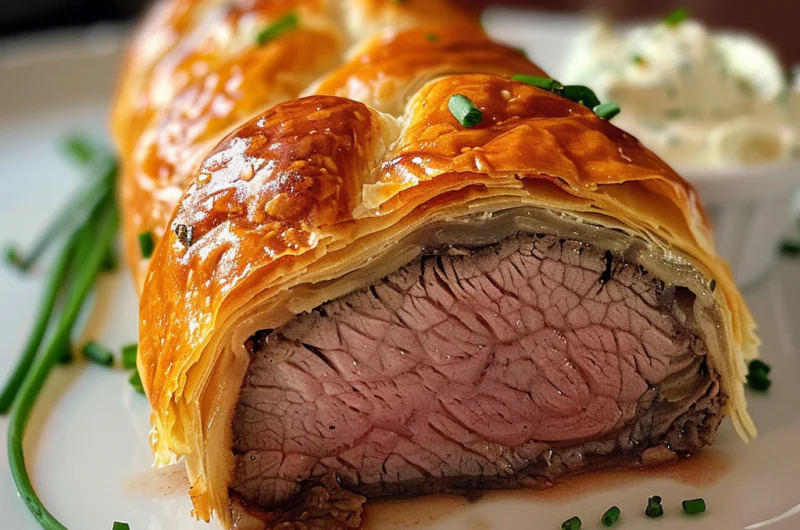
Tender beef tenderloin, savory mushroom duxelles, and fragrant herbs wrapped in flaky puff pastry—these bite-sized appetizers deliver high-end steakhouse flavor without the fuss of a full Wellington.
📋 In This Article
- Introduction
- Why It Works: The Perfect Party Appetizer
- Ingredients: Crafting Culinary Perfection
- Step-by-Step Instructions: From Prep to Plate
- The Secret to the Perfect Garlic Herb Crust
- Creamy Horseradish Dipping Sauce: The Ultimate Pairing
- Common Mistakes to Avoid for Wellington Perfection
- Variations & Customizations
- Make-Ahead & Storage Tips
- Chef’s Pro Tips for Impressive Results
- Frequently Asked Questions (FAQ)
Introduction
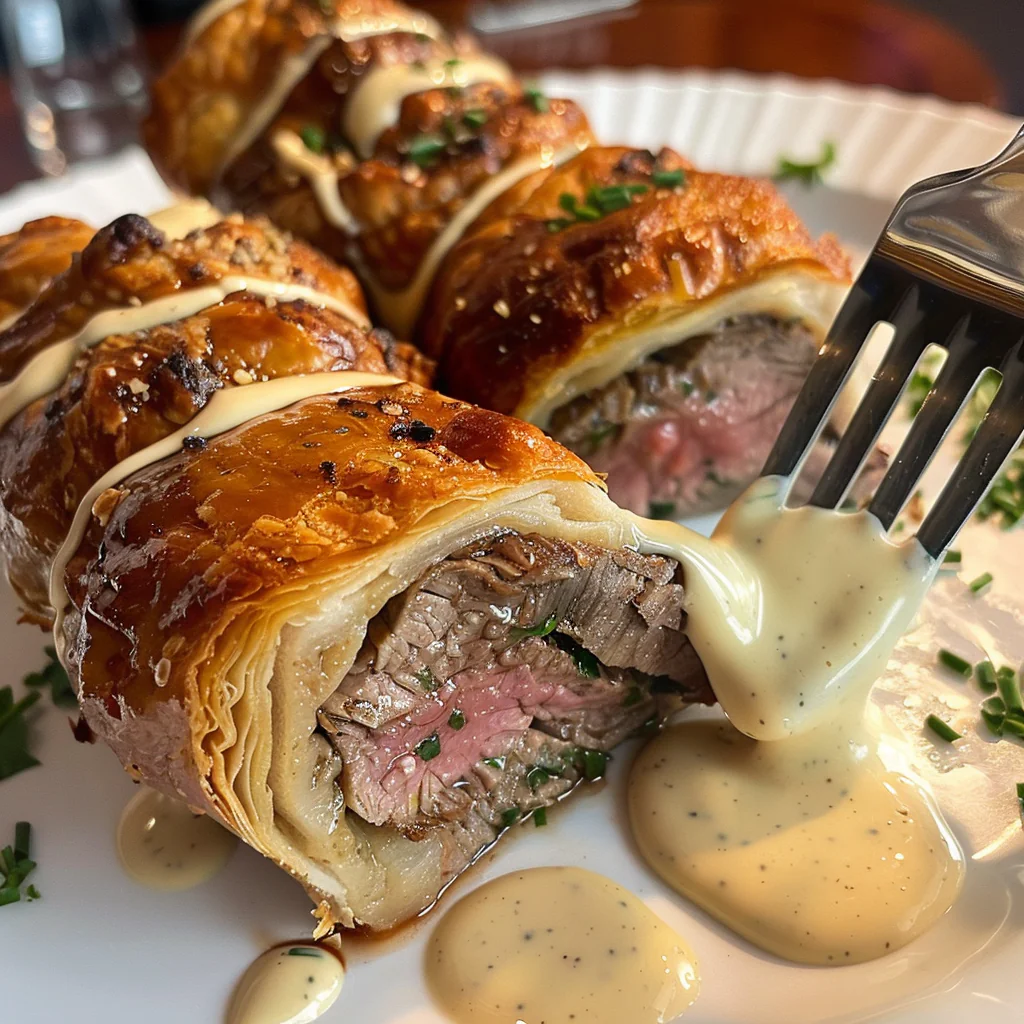
Let’s be honest: a full Beef Wellington is a high-stakes project. It’s expensive, time-consuming, and frankly, terrifying to cut into at a dinner party. That’s why I love these Irresistible Garlic Herb Crusted Beef Wellington Bites. They give you all the savory, buttery glory of the classic dish but in a low-stress, high-reward format. You get the rich, earthy mushroom duxelles, the tender beef, and the flaky pastry, all finished with a punchy, creamy horseradish sauce that cuts through the richness.
The first time I tested these, I skipped chilling the assembled bites before baking. The pastry slid right off the filling. Lesson learned: that 20-minute chill in the fridge is the difference between a messy puff and a perfect one. Whether you’re hosting a cocktail hour or need a show-stopping starter, this recipe is designed to make you look like a pro while actually letting you enjoy your own party.
Why It Works: The Perfect Party Appetizer
These Irresistible Garlic Herb Crusted Beef Wellington Bites solve the biggest problem with traditional Wellington: the soggy bottom. By creating individual portions, you increase the surface area for pastry contact, ensuring every single bite has that shatteringly crisp crust. The high heat of the oven rapidly evaporates moisture from the pastry layers, creating steam that lifts the dough (lift equals flake).
The internal temperature climbs quickly for the beef but slowly enough to keep the pastry from burning, a balance that’s hard to strike with a large roast. Plus, the Creamy Horseradish Dipping Sauce isn’t just a condiment; it’s a functional pairing. The acidity and sharp heat of the horseradish cleanse the palate between bites, preventing the richness of the beef and butter from overwhelming your taste buds.
Ingredients: Crafting Culinary Perfection
For the Beef Wellington Bites
High-quality beef tenderloin is non-negotiable here. You need about 700 grams, trimmed of the silverskin—that tough connective tissue that never breaks down. For the crust, you’ll need fresh garlic (minced fine) and a mix of fresh herbs: rosemary, thyme, and parsley.
The filling relies on 200 grams of button mushrooms and 2 shallots, finely diced. We’re going to cook these down until they’re virtually dry—this is the duxelles. You’ll also need 1 tablespoon of olive oil for searing, 1 tablespoon of butter for the mushrooms, and a splash of Worcestershire sauce to anchor the umami. To bridge the gap between meat and pastry, have ¼ cup Dijon mustard ready. You’ll need 4 sheets of defrosted puff pastry and a lightly beaten egg for the wash.
For the Creamy Horseradish Dipping Sauce
This sauce is a study in balance. Use 1 cup of sour cream and ¼ cup of mayonnaise for a base that’s tangy yet rich. 3 tablespoons of fresh horseradish provides the heat, while 2 tablespoons of apple cider vinegar adds the necessary acid to cut through the fat. ½ tablespoon of Dijon mustard ties it all together.
Step-by-Step Instructions: From Prep to Plate
Preparation
Start by trimming your 700g beef tenderloin. Cut it into 3 cm cubes—uniformity is key for even cooking. Season them generously with ½ tsp salt and ¼ tsp black pepper. Let them sit on the counter while you prep the rest; pulling the chill off the meat helps with browning.
Searing Beef
Heat 1 tbsp of olive oil in a large frying pan over medium-high heat. When the oil shimmers, add the beef cubes. Sear for 1 minute on each side. We aren’t cooking the beef through here; we are triggering the Maillard reaction. This chemical reaction between amino acids and reducing sugars gives browned food its distinctive flavor—hundreds of new flavor compounds are created that raw meat simply doesn’t have. Work in batches if you need to. Overcrowding the pan drops the temperature, causing the meat to steam in its own juices rather than develop a crust. Transfer seared beef to a paper towel-lined plate.
Mushroom Duxelles
In the same pan (don’t wash it—those browned bits are liquid gold), melt 1 tbsp of butter. Add 2 finely diced shallots and 200g of finely diced button mushrooms. Cook them down for 5-7 minutes. The goal is to evaporate every drop of moisture. If the mushrooms are wet, your pastry will turn to soggy cardboard. Stir in 1 tbsp of Worcestershire sauce at the end to deglaze the pan, scraping up any fond. Let this mixture cool completely.
Garlic Herb Crust
In a small bowl, combine 2 tbsp of finely minced garlic and 1 tbsp of fresh thyme. This potent mix is going right on top of the beef, inside the pastry, ensuring every bite has an aromatic punch.
Assembling Bites
Roll out your 4 sheets of puff pastry slightly and cut each into 6 equal squares. Brush the center of a square with a thin layer of Dijon mustard—this acts as a barrier, adding flavor while protecting the pastry from the beef’s juices. Top with a spoonful of the cooled mushroom mixture, a piece of beef, and a sprinkle of the garlic herb mix. Fold the corners up and pinch the edges to seal. Critical step: Place the assembled bites on a baking tray and chill them in the fridge for at least 20 minutes. Cold pastry puffs better; warm pastry melts into a greasy puddle.
Baking
Preheat your oven to 200°C (400°F). Once the bites are chilled, brush them with the beaten egg. Bake for 10-15 minutes until puffed and golden. The high heat ensures the water in the pastry turns to steam rapidly, creating those flaky layers. If the tops brown too fast, tent loosely with foil.
Horseradish Sauce Prep
While the oven does the work, whisk together 1 cup of sour cream, ¼ cup of mayonnaise, 3 tbsp of horseradish, 2 tbsp of apple cider vinegar, and ½ tbsp of Dijon mustard. Season with a pinch of salt. Refrigerate until serving.
Serving
Serve the Irresistible Garlic Herb Crusted Beef Wellington Bites warm. The contrast between the hot, crisp pastry and the cool, creamy sauce is the whole point.
The Secret to the Perfect Garlic Herb Crust
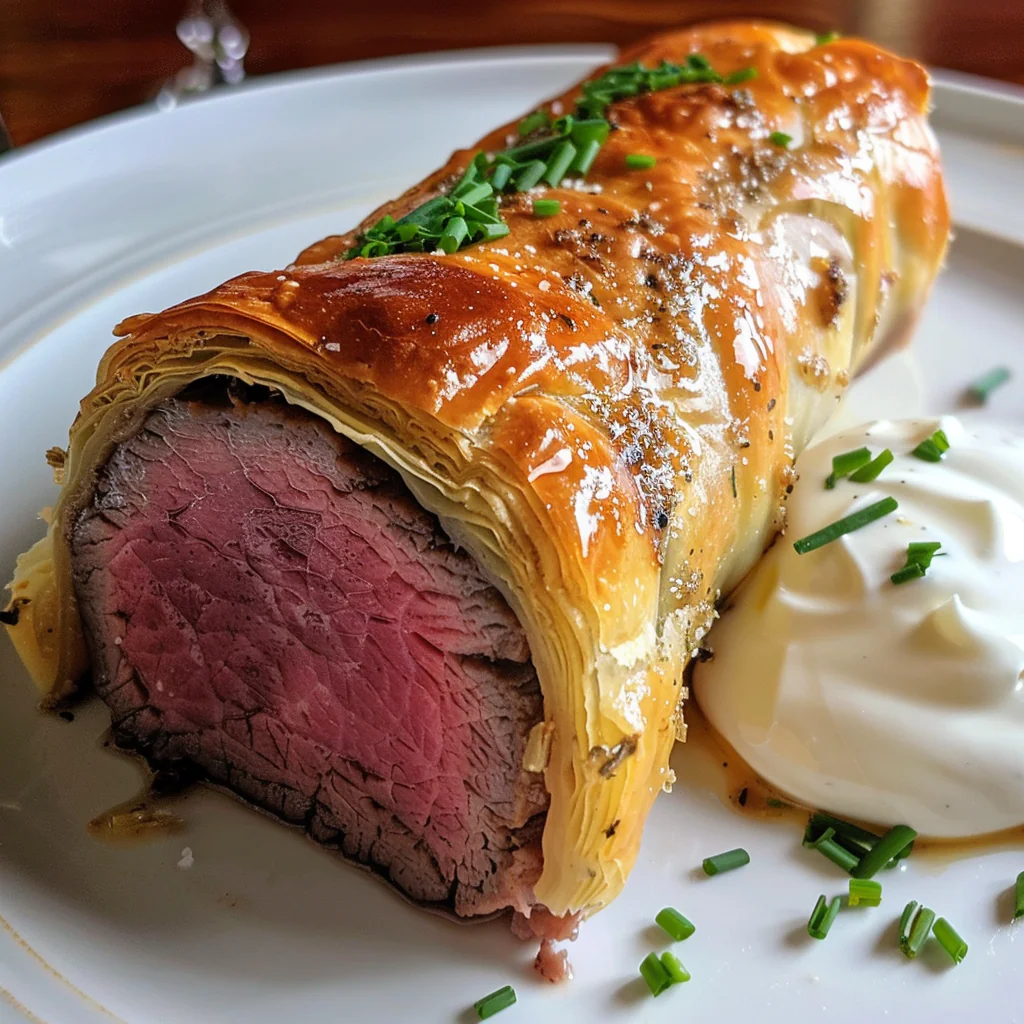
The crust isn’t just a topping; it’s a flavor bomb. By mixing the garlic and herbs directly and placing them on the beef, you ensure the aromatics infuse the meat rather than getting lost in the pastry. If you want extra texture, consider mixing Panko breadcrumbs into your garlic herb paste. This creates a barrier that keeps the pastry dry and adds a satisfying crunch.
Creamy Horseradish Dipping Sauce: The Ultimate Pairing
Fat carries flavor, but it also coats the tongue. The Creamy Horseradish Dipping Sauce uses acidity from the vinegar and the chemical heat of isothiocyanate (the active compound in horseradish) to cut through that richness. If you can, make this a day ahead. The flavors marry and mellow, resulting in a smoother, more integrated taste.
⚠️ Common Mistakes to Avoid for Wellington Perfection
The number one enemy of a good Wellington bite is moisture. If your mushroom duxelles isn’t cooked until it’s practically a paste, the released water will destroy your pastry’s lift. Another frequent error is skipping the sear. Yes, it’s an extra step, but without the Maillard reaction, the beef tastes boiled and bland.
Finally, watch your oven temperature. If you bake at too low a temperature, the butter in the pastry melts out before the water turns to steam, resulting in a dense, greasy dough. You need that initial blast of high heat.
Variations & Customizations
For a deeper, earthier flavor, swap the button mushrooms for cremini or shiitake. A drizzle of truffle oil in the duxelles elevates this to a luxury item. If you want to push the flavor profile further, add a small cube of Gruyere cheese inside each bite—it melts into a savory pocket that pairs beautifully with the beef.
Need a gluten-free option? Use a Gluten-Free Puff Pastry, though note that the rise won’t be quite as dramatic. For a vegetarian spin, replace the beef with a hearty chunk of roasted beet or a dense mushroom stalk; the technique remains the same.
Make-Ahead & Storage Tips
You can assemble the Irresistible Garlic Herb Crusted Beef Wellington Bites and freeze them raw on a baking sheet. Once solid, transfer them to a resealable bag. They can be baked straight from frozen—just add 3-5 minutes to the cooking time. The horseradish dipping sauce keeps in the fridge for up to a week in an airtight container.
To reheat cooked bites, skip the microwave. It makes pastry limp. Use a 350°F oven or an air fryer for a few minutes to re-crisp the crust.
💡 Chef’s Pro Tips for Impressive Results
Always rest your meat after searing. When meat heats up, the muscle fibers contract and push juices to the center. If you cut into it immediately, those juices spill out. Resting allows the fibers to relax and reabsorb the liquid. Also, when brushing the egg wash, avoid letting it drip down the cut edges of the pastry; this glues the layers together and prevents rising.
Frequently Asked Questions (FAQ)
+Can I make these Beef Wellington Bites ahead of time?
Yes, you can assemble the bites and refrigerate them raw for up to 24 hours before baking. For longer storage, freeze them unbaked on a sheet pan, then transfer to a freezer bag.
+Why is my puff pastry soggy on the bottom?
Soggy pastry is almost always caused by excess moisture. Ensure your mushroom duxelles is completely cool and dry before assembly, and bake at a high enough temperature (400°F) to drive off steam quickly.
+What internal temperature should the beef be?
For medium-rare, aim for an internal temperature of 130°F (54°C) in the center of the beef. Remember that carryover cooking will raise the temperature a few degrees after you pull them from the oven.
+Can I use phyllo dough instead of puff pastry?
You can, but the texture will be completely different—crispy and shatter-thin rather than puffy and rich. If using phyllo, brush each layer generously with butter to prevent drying out.