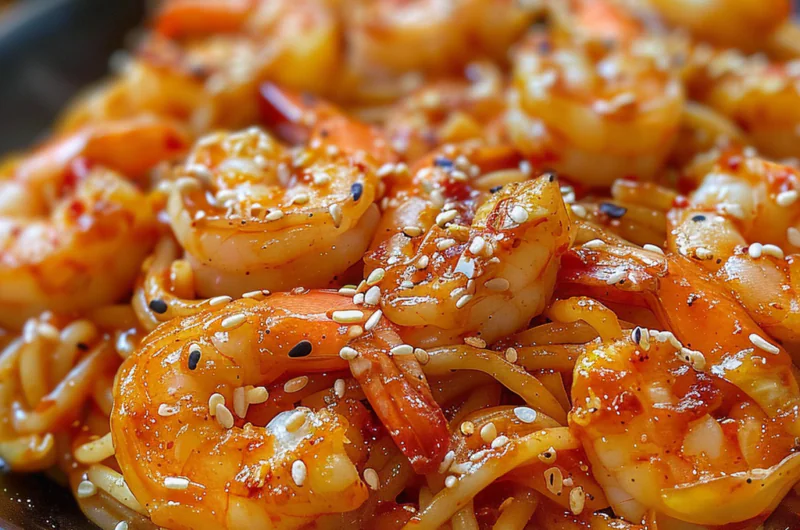
A bold, umami-rich pasta that comes together in 20 minutes — tender shrimp, crisp Napa cabbage, and a silky gochujang sauce that clings to every strand.
📋 In This Article
Introduction
Look, I’ve made a lot of weeknight pasta dishes in my time. Some are fine. Most are forgettable. But this Spicy Gochujang Shrimp Pasta with Napa Cabbage and Toasted Sesame Seeds is the one I keep coming back to when I need something fast but genuinely exciting. The gochujang — that fermented Korean chili paste — does heavy lifting here, delivering a funky, spicy-sweet depth that regular tomato sauce just can’t touch.
What makes this work isn’t just speed. It’s the way the ingredients interact: shrimp quickly seared until just opaque, Napa cabbage wilted until crisp-tender, and a sauce built from fond, butter, and starchy pasta water. The result is a 20-minute meal that tastes like you spent an hour on it.
Why This Recipe Works
This dish succeeds because every component earns its place. Gochujang brings fermented umami — the kind of depth you get from miso or aged cheese, but with a slow-building heat. Shrimp cook in under three minutes, making them ideal for weeknight cooking. And Napa cabbage? It wilts fast but keeps texture, adding bulk without the wateriness of spinach or the toughness of kale.
The real magic happens when you emulsify pasta water with butter and gochujang. That starch helps bind the sauce to the noodles, creating a velvety coating rather than a thin layer at the bottom of the bowl.
One-pan, minimal cleanup, maximum flavor.
Ingredients You’ll Need
Proteins
- Shrimp (1 lb, large): Fresh or frozen (thawed), peeled and deveined. Tail-on looks nicer; tail-off is easier to eat.
Vegetables
- Napa Cabbage (2 cups, shredded): Adds crunch and mild sweetness that balances the heat. Don’t substitute regular cabbage — it’s too tough for this timeline.
- Garlic (3 cloves, minced) & Onion (½ medium, diced): The aromatic base.
- Scallions (2-3, sliced): For garnish and a fresh bite.
Pantry Staples
- Pasta (8 oz): Spaghetti, linguine, or short shapes like fusilli all work. Gluten-free pasta works too, but watch cook times.
- Gochujang (2 tablespoons): The star. Look for a tub with Korean text — it’s usually more authentic.
- Butter (2 tablespoons): Creates richness and helps emulsify the sauce.
- Milk (1 cup): Whole milk works best; unsweetened almond milk is a decent substitute.
- Parmesan Cheese (¼ cup, grated): Umami booster. Nutritional yeast works for dairy-free.
- Soy Sauce (1 tablespoon): Adds salt and depth.
- Sesame Oil (1 teaspoon, toasted): For finishing — a little goes a long way.
- Toasted Sesame Seeds (1 tablespoon): Nutty crunch on top.
- Salt & Black Pepper: To taste.
Step-by-Step Instructions
Step 1: Mise en Place
Before you turn on the stove, get everything prepped. Shrimp patted dry, cabbage shredded, garlic minced, onion diced. This isn’t just chef talk — when things move fast, you don’t want to be chopping while your garlic burns.
Step 2: Sear the Shrimp
In a large skillet, melt 1 tablespoon of butter over medium-high heat. Season shrimp with salt and pepper, then add to the pan in a single layer. Cook for 1-2 minutes per side until pink and opaque. Overcooked shrimp get rubbery fast — pull them when they’re just done. Transfer to a plate.
The first time I rushed this step and crowded the pan, the shrimp steamed instead of searing. No browning, less flavor. Give them space.
Step 3: Build the Aromatic Base
In the same pan (don’t wash it — that fond is flavor), add the remaining butter over medium heat. Add onion and cook 2-3 minutes until translucent. Add garlic and cook 30 seconds until fragrant, stirring constantly so it doesn’t brown.
Step 4: Bloom the Gochujang
Add the gochujang to the pan and cook for 1 minute, stirring constantly. This step matters more than you think. Blooming the paste in fat wakes up compounds that stay dormant if you just stir it into liquid later. The flavor becomes deeper, more integrated.
Step 5: Create the Sauce
Pour in the milk while stirring. Add soy sauce. Let it simmer for 2-3 minutes until slightly thickened. Meanwhile, cook your pasta in salted water until just shy of al dente — about 1 minute less than the package says. Reserve 1 cup of pasta water before draining.
Step 6: Emulsify and Combine
Add the pasta to the sauce along with ½ cup of pasta water. Toss vigorously. The starch in that water helps the sauce cling to the noodles instead of pooling at the bottom. If it looks too thick, add more pasta water a splash at a time.
Step 7: Finish with Shrimp and Cabbage
Add the cooked shrimp back to the pan along with the shredded Napa cabbage. Toss for 1-2 minutes until the cabbage wilts slightly but still has crunch and the shrimp are heated through.
Step 8: Serve
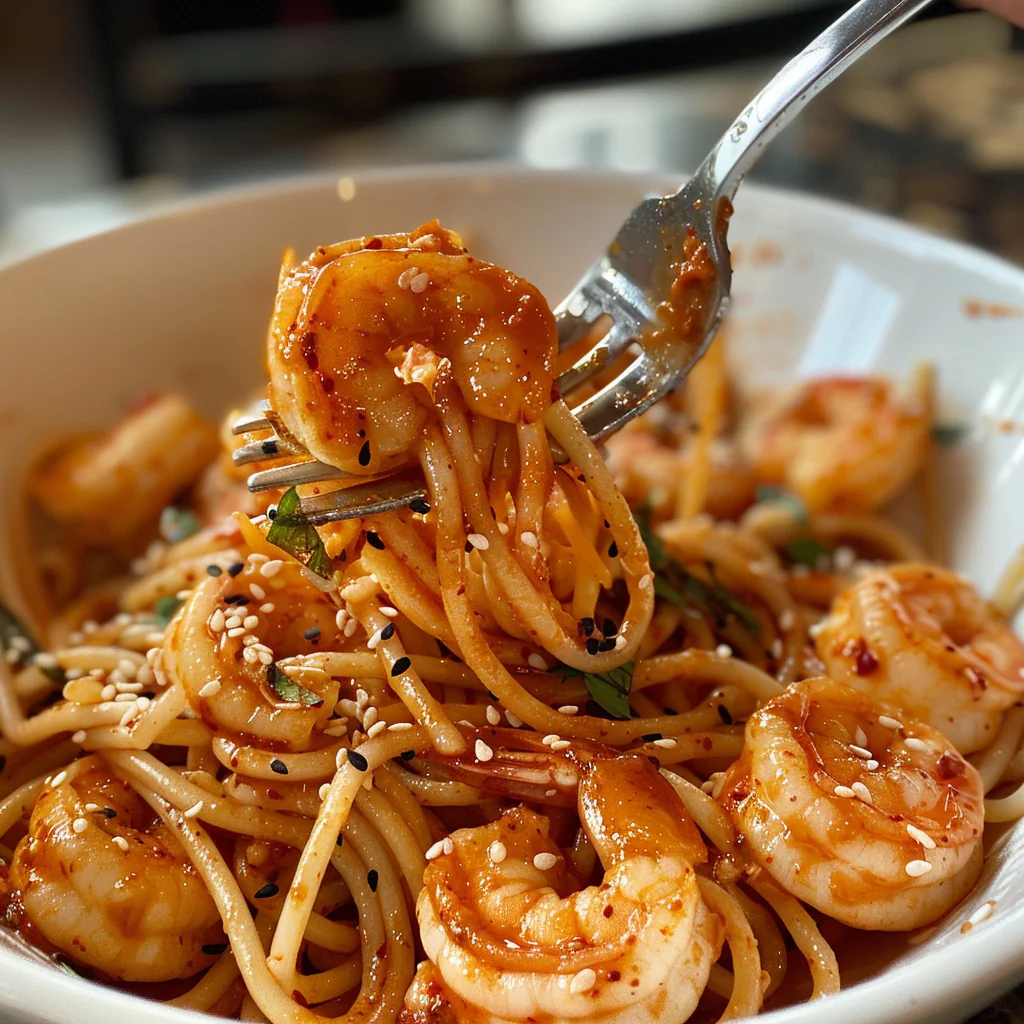
Remove from heat. Drizzle with sesame oil, top with toasted sesame seeds and sliced scallions. Eat immediately.
⚠️ Common Mistakes to Avoid
Overcooked shrimp: They go from perfect to rubbery in about 30 seconds. Pull them when they’re just opaque and curled slightly.
Skipping the pasta water: Without that starch, your sauce separates and slides off the noodles. Save the water.
Adding cabbage too early: Napa cabbage wilts fast. If you add it with the pasta, it’ll be mush by the time you serve. Two minutes at the end is all it needs.
Not tasting the gochujang first: Brands vary wildly in heat and sweetness. Taste yours before adding — you might need more or less than the recipe calls for.
Thin sauce: If your sauce isn’t coating the pasta, it needs more time to reduce or more pasta water to emulsify. Keep tossing.
Variations and Customizations
Protein swaps: Chicken thigh (bite-sized pieces, cook 4-5 minutes), scallops (sear 2 minutes per side), or firm tofu (press, cube, and pan-fry first). Each brings something different — tofu soaks up sauce like a sponge.
Vegetable additions: Mushrooms add meatiness. Bell peppers bring sweetness. Spinach works if you want something leafier, but add it last — it wilts in seconds.
Dairy-free: Use coconut milk instead of dairy milk and skip the cheese. The coconut adds sweetness that plays nicely with gochujang’s heat.
Gluten-free: Rice noodles or gluten-free pasta. Just adjust cook times and save extra pasta water — gluten-free pasta releases less starch.
Extra heat: Add gochugaru (Korean chili flakes) or a dash of sriracha if the gochujang isn’t hitting hard enough.
Storage and Reheating
Leftovers keep in an airtight container in the refrigerator for 3-4 days. The cabbage loses crunch but the flavor holds. Reheat gently — microwave in 30-second intervals with a splash of water, or warm in a skillet over medium-low. Don’t reboil or the shrimp will toughen.
I wouldn’t freeze this. The texture of both pasta and shrimp suffers after thawing, and the sauce can break.
For meal prep, cook the components separately and combine just before eating. The sauce can be made ahead and refrigerated for up to a week.
💡 Pro Tips for Better Results
Toast your own sesame seeds: Raw seeds have almost no flavor. Toast them in a dry pan for 2-3 minutes until golden and fragrant. The difference is real.
Use pasta water strategically: The starch in pasta water is essentially free thickener. It helps sauces cling and adds body without extra fat.
Don’t wash the pan between steps: That browned residue (fond) at the bottom of the pan is concentrated flavor. Deglaze it with your milk and it dissolves right into the sauce.
Taste as you go: Gochujang varies. Pasta shapes vary. Salt levels vary. Trust your palate over the recipe.
Finish with fat: That final drizzle of sesame oil isn’t garnish — it carries aromatic compounds that bloom when they hit the hot pan. Add it off the heat so the flavor stays bright.
Frequently Asked Questions
+What is gochujang made of?
Gochujang is a fermented Korean paste made from red chili powder, glutinous rice, fermented soybeans, and salt. The fermentation gives it deep umami flavor that regular hot sauce lacks.
+Is gochujang gluten-free?
Not always. Traditional gochujang contains fermented soybeans and may use wheat-based ingredients. Check labels — some brands specifically certify gluten-free.
+What can I substitute for gochujang?
Mix miso paste with sriracha or chili flakes — about 1 tablespoon miso to 1 teaspoon chili. It won’t have the same fermented depth, but it works in a pinch.
+How do I know when shrimp is cooked?
Shrimp turn from gray to pink and opaque. They should feel firm but still have a little give. If they’re tight and rubbery, they’re overdone.
+Can I make this ahead?
The sauce can be made ahead and refrigerated. Cook pasta and shrimp fresh — both suffer from reheating.
+What should I serve with this?
Steamed rice on the side stretches the meal. A simple cucumber salad with rice vinegar cuts the richness. Cold beer or a dry riesling pairs well with the heat.
+Can I use frozen shrimp?
Yes, but thaw completely and pat dry before cooking. Excess moisture prevents proper searing.
+Why is my sauce separating?
The emulsification broke — probably because the pan was too hot or you didn’t add enough pasta water. Lower the heat, add more pasta water, and whisk vigorously until it comes back together.