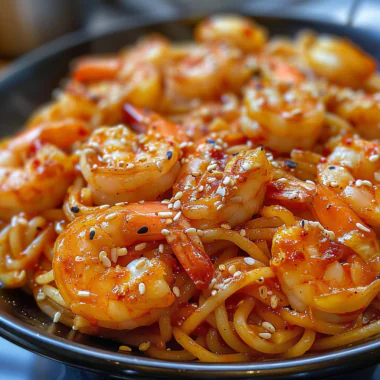
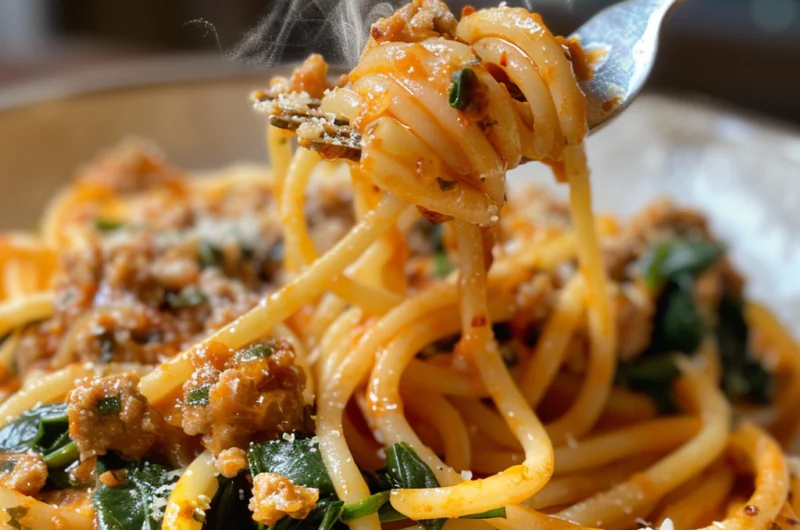
A fiery, creamy weeknight dinner where the pasta cooks right in the sauce for maximum flavor and minimal cleanup.
📋 In This Article
Introduction
Most chili pastes just bring heat. Calabrian chilis? They bring soul. They offer a distinct, fruity depth that standard red pepper flakes simply cannot match. When you pair that complex heat with the rendered fat of Italian sausage and the cooling embrace of heavy cream, you get a sauce that clings to every nook and cranny of the pasta.
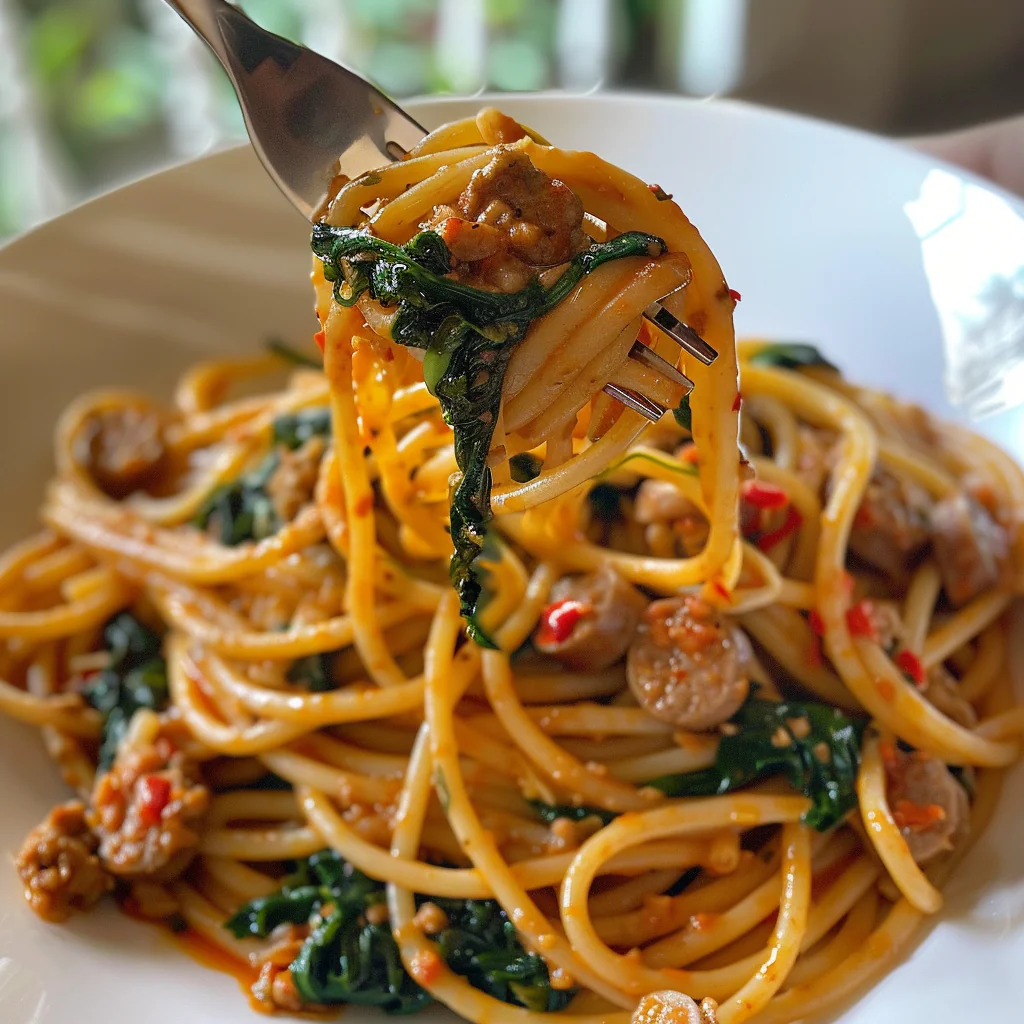
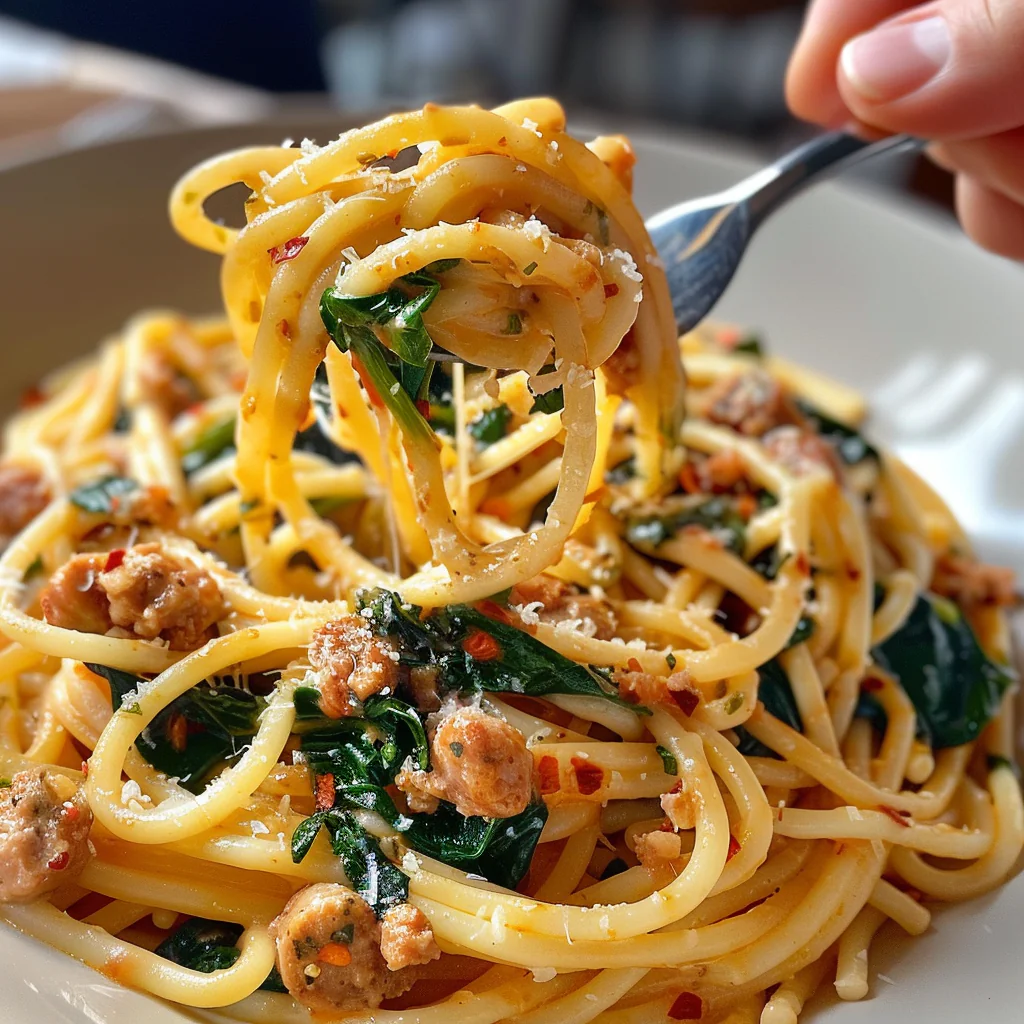
This Creamy One-Pot Spicy Calabrian Chili Pasta with Italian Sausage and Wilted Spinach for an Easy Weeknight Meal is the kind of dinner that feels like it took hours, yet it hits the table in under 30 minutes. The magic lies in the one-pot technique. By cooking the pasta directly in the liquid, the starch leaches out into the broth, thickening it into a velvety, emulsified sauce without the need for a separate roux or slurry. It’s high-reward cooking for the time-strapped home cook.
The Science of One-Pot Pasta
Why cook pasta in a pot with gallons of water just to pour most of it down the drain? For this dish, we use a concentrated amount of liquid—just enough to hydrate the noodles.
Here is the food science behind why this works: as the pasta boils, the surface starch molecules swell and burst. In a traditional pot, this starch dilutes into the massive volume of water. But in this method, that starch remains concentrated in the cooking liquid. When you add heavy cream andParmesan later, that starchy liquid acts as an emulsifier, binding the fat from the sausage and cream into a stable, glossy sauce. It’s chemistry working in your favor.
Understanding the Heat: Calabrian Chilis
The heart of this dish is the Calabrian chili. Hailing from the Calabria region of Italy, these chilis are famous for a heat profile that is spicy, yes, but also surprisingly fruity and smoky.
You will typically find them in three forms: whole packed in oil, crushed into a paste, or dried as flakes. For this recipe, I strongly recommend the paste. It dissolves seamlessly into the cream sauce, ensuring every bite is seasoned evenly. If you can only find the whole chilis, give them a rough chop before adding them. If you are sensitive to heat, start with one tablespoon; you can always add more, but you can’t take it back.
Ingredients You’ll Need
Gather these ingredients to build layers of flavor.
- 8 oz Italian Sausage: Sweet or hot, depending on your preference. If using sausage links, remove the casings.
- 2 tbsp Olive Oil: A neutral base for sautéing.
- 3 cloves Garlic: Minced. Don’t be shy with the garlic; it bridges the gap between the meat and the spice.
- 1 medium Onion or 2 Shallots: Finely chopped. Shallots offer a sweeter, more delicate flavor.
- 1-2 tbsp Calabrian Chili Paste: The star ingredient.
- 4 tbsp Tomato Paste: This provides the deep, savory base and helps thicken the sauce.
- 1 cup Chicken or Vegetable Broth: The cooking liquid.
- 12 oz Pasta: Rigatoni, orecchiette, or penne work best. Their shapes trap the thick sauce.
- 1/2 cup Heavy Cream: Essential for the “creamy” in the title.
- 3 cups Baby Spinach: Fresh. It will look like a lot, but it wilts down significantly.
- 1/2 cup Parmesan Cheese: Grated. Adds saltiness and umami.
- Salt and Black Pepper: To taste.
- 1 tsp Italian Seasoning: For fragrant herbal notes.
Step-by-Step Cooking Instructions
- Brown the Sausage: In a large pot or deep skillet, heat the olive oil over medium heat. Add the Italian sausage, breaking it apart with a wooden spoon. Sauté for 5-7 minutes. You want the sausage to develop a deep brown crust—this is the Maillard reaction creating hundreds of new flavor compounds. Don’t rush this step.
- Sauté Aromatics: Add the chopped onion (or shallots) and minced garlic to the pot. Sauté for 2-3 minutes until the onions are translucent and the garlic is fragrant. If the garlic starts to brown too quickly, lower the heat.
- Bloom the Spices: Stir in the Calabrian chili paste and the tomato paste. Cook for 1 minute. “Blooming” the spices in the hot fat amplifies their flavor profile significantly compared to adding them later to a liquid base.
- Add Liquid and Pasta: Pour in the chicken (or vegetable) broth and 3 cups of water. Scrape the bottom of the pot to release any browned bits—that fond is pure flavor. Add the dry pasta. Stir well to ensure the pasta is submerged. Increase the heat to bring the liquid to a simmer.
- Simmer the Pasta: Cover the pot and reduce heat to medium-low. Cook for 10-12 minutes, stirring occasionally to prevent sticking. The pasta should be al dente and the liquid should have reduced into a thickened sauce.
- Create the Cream Sauce: Lower the heat. Stir in the heavy cream and half of the Parmesan cheese. The sauce should coat the back of a spoon.
- Wilt the Spinach: Fold in the baby spinach. It will look like a mountain, but stir it gently for 1-2 minutes. It wilts rapidly, retaining a slight texture and vibrant color.
- Final Adjustments: Remove from heat. Taste the sauce. Does it need salt? Probably not, thanks to the sausage and cheese, but adjust if needed. If the sauce is too thick (it continues to thicken as it cools), add a splash of the reserved pasta water or regular water to loosen it.
- Serve: Dish into bowls and top with the remaining Parmesan.
⚠️ Common Mistakes to Avoid
Even a simple recipe has pitfalls. Here is how to avoid them.
Overcooking the Pasta: Because the pasta finishes cooking in the sauce, it retains heat and continues to cook. Pull the pot from the heat the moment the pasta reaches al dente. If it looks slightly underdone, that is perfect—it will finish cooking in the residual heat.
A Broken Sauce: If your sauce looks greasy or separated, it usually means the heat was too high when you added the cream. Heavy cream is stable, but boiling it violently can cause the fat to separate. Keep the heat low and stir gently to emulsify.
Draining the Fat: I used to drain all the sausage fat—don’t. That rendered fat carries the spice from the chili and the flavor from the meat. If there is an excessive amount (more than 2 tablespoons), you can drain some, but leave enough to cook your aromatics in.
💡 Pro Tips for Next-Level Flavor
Reserve Your Pasta Water: Even though we are cooking the pasta in the sauce, if you have a separate pot of water boiling for other reasons, use some of that starchy water. It is liquid gold for adjusting consistency. If not, a splash of regular water works fine for thinning the sauce just before serving.
Deglaze with Wine: For an extra layer of complexity, deglaze the pan with a splash of dry white wine after sautéing the sausage and before adding the broth. The acid cuts through the richness of the cream.
Finish with Acid: A squeeze of fresh lemon juice or a dash of red wine vinegar right at the end brightens the entire dish. Fat and acid balance each other out.
Flavor Variations & Customizations
This recipe is a template. Make it yours.
- Protein Swaps: Ground turkey or chicken sausage works well for a lighter version. For a seafood twist, try shrimp—just add them in the last 4 minutes of cooking so they don’t turn rubbery.
- Vegetarian Option: Use plant-based sausage and vegetable broth. The heavy cream and Calabrian chili still provide a rich, satisfying mouthfeel.
- Vegetable Add-ins: Roasted red peppers or sun-dried tomatoes add a sweet chewiness that contrasts the spicy heat. Mushrooms are also a great addition; sauté them with the onions.
- Gluten-Free: Use your favorite gluten-free pasta. Note that some brands absorb more liquid, so keep an eye on the sauce consistency and add more broth if needed.
Storage & Reheating Tips
Store leftovers in an airtight container in the refrigerator for up to 3 days. The sauce will thicken considerably as it cools because the starch retrogrades.
To reheat, add a splash of water or broth to the pasta before microwaving or warming on the stovetop. This rehydrates the sauce and returns it to a creamy consistency. I learned the hard way that reheating without liquid results in a dry, clumpy mess.
Frequently Asked Questions (FAQ)
+Can I use milk instead of heavy cream?
You can, but the sauce will be much thinner and less luxurious. Heavy cream has a high fat content (around 36-40%) which allows it to reduce and thicken without curdling. If using milk, simmer it gently and consider adding a little extra Parmesan to help thicken it.
+Why is my pasta sauce watery?
If you had the heat too high, the liquid may have evaporated before the pasta cooked, or conversely, you didn’t cook it long enough for the starch to release. If it’s watery, keep the pot on low heat for another 2-3 minutes and stir vigorously—the starch will thicken it up.
+Is Calabrian chili paste very spicy?
It has a medium-high heat level. It is definitely spicier than a jalapeño but has a complex, smoky flavor that rounds out the heat. If you are sensitive, start with 1 teaspoon and taste as you go.
+What can I substitute for Calabrian chili paste?
Sambal oelek is a decent substitute for the texture, though it lacks the smoky nuance. Sriracha works in a pinch but is much sweeter and garlickier. You can also use red pepper flakes, though you will lose the smooth texture of the paste.
+Can I make this ahead of time?
You can prep the ingredients (chopping onions, measuring spices) ahead of time. However, because the pasta absorbs the sauce as it sits, it is best eaten immediately after cooking for the ideal texture.