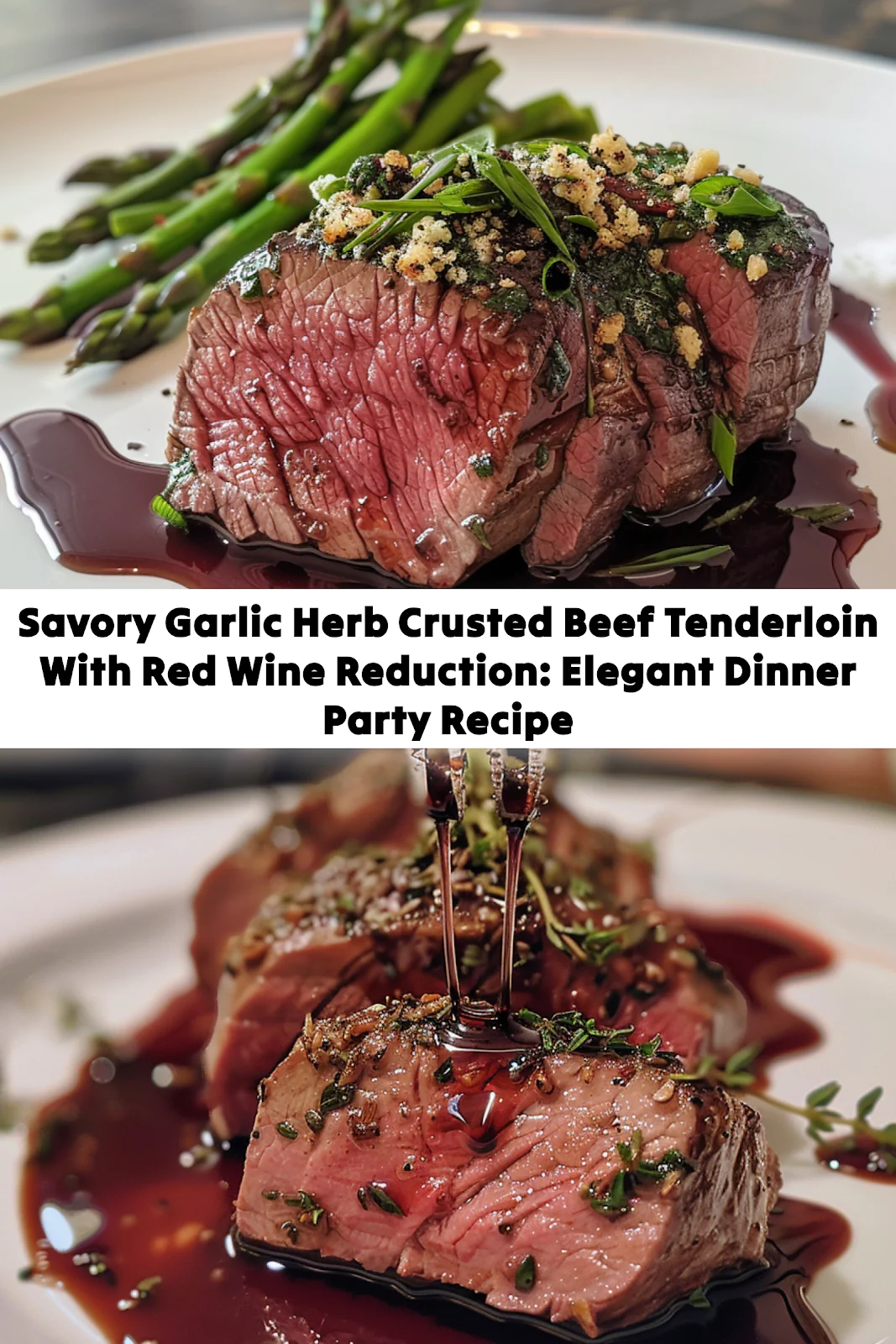
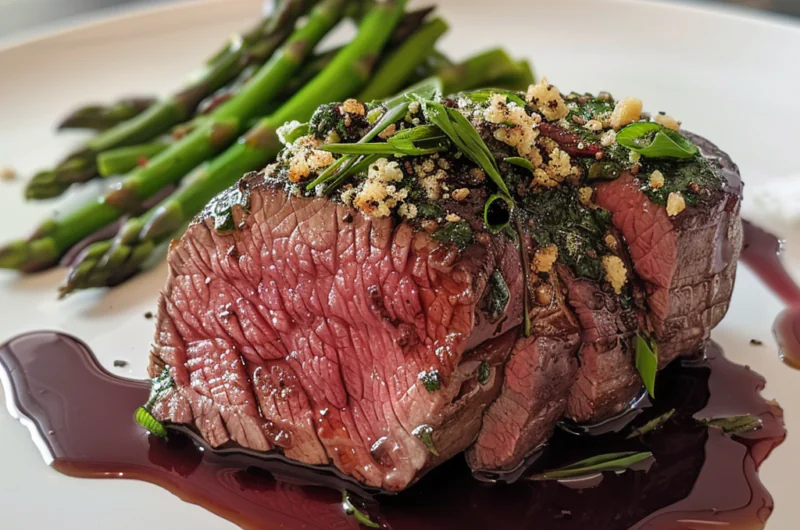
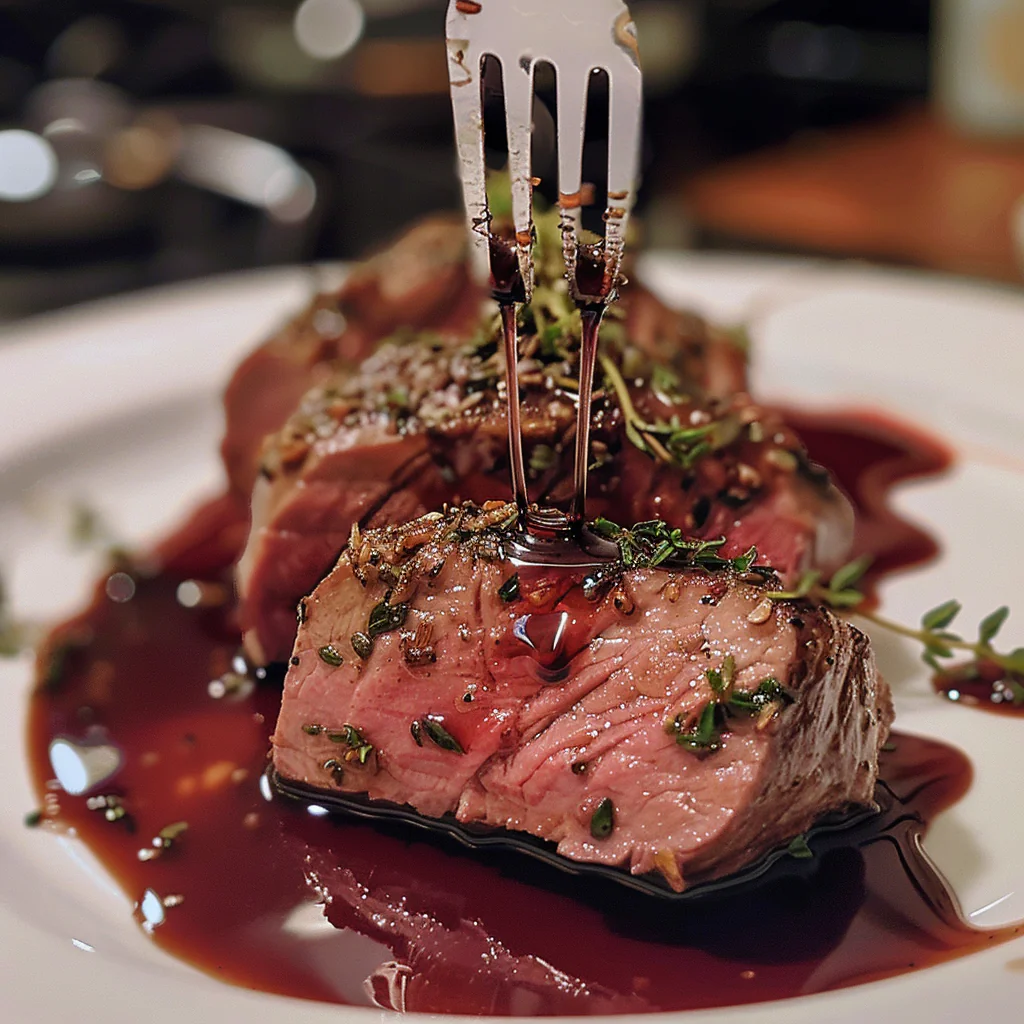
A center-cut tenderloin roasted to juicy perfection under a fragrant blanket of garlic and herbs, finished with a pan sauce that tastes like a million bucks.
📋 In This Article
- Introduction
- Why This Recipe Works (The Science of Flavor)
- Essential Ingredients & Expert Selection
- Step-by-Step Directions
- Common Mistakes to Avoid
- Elegant Serving Suggestions & Pairings
- Variations & Customizations
- Storage, Reheating, & Leftover Inspiration
- Pro Tips from the Test Kitchen
- Frequently Asked Questions (FAQ)
Introduction
Let’s be honest: roasting a whole Beef Tenderloin can feel like a high-stakes gamble. It’s an expensive cut of meat, and the pressure to get it right for a dinner party can make even the most calm cook sweat a little. But here is the secret—it doesn’t have to be stressful. This Savory Garlic Herb Crusted Beef Tenderloin with Red Wine Reduction is actually one of the easiest centerpieces you can make. It just sounds fancy.
The magic happens when high heat meets the Maillard Reaction, creating a deeply caramelized exterior that gives way to a buttery, blushing-pink center. We’re talking about a flavor profile that leans heavily on fresh herbs like rosemary and thyme, punched up by pungent garlic. And that red wine reduction? It’s not just gravy; it’s a concentrated elixir that captures every bit of flavor left behind in the pan. This is the dish you make when you want to look like a culinary genius without spending all night in the kitchen.
Why This Recipe Works (The Science of Flavor)
There is a specific kind of magic that happens in the pan when you cook meat this way. The Maillard Reaction is the star of the show here. This isn’t just “browning”—it’s a complex chemical process where amino acids and reducing sugars react under high heat to create hundreds of new flavor compounds. That deep, savory crust on your Garlic Herb Crusted Beef Tenderloin? That is pure chemistry, and it provides a textural contrast to the soft interior.
Then there is the red wine reduction. A lot of people just thicken broth and call it a day, but a true reduction relies on evaporation. As the red wine simmers, water evaporates, leaving behind concentrated flavor compounds and sugars. This increases the viscosity naturally. When we whisk in cold unsalted butter at the end, we are creating an emulsion. The butterfat suspends in the liquid, creating a velvety, silky texture that clings to the meat rather than running off the plate.
Essential Ingredients & Expert Selection
You can’t hide mediocre ingredients in a dish this simple. The quality of your Beef Tenderloin dictates the final result. Look for a Prime grade cut if you can swing it; the marbling (intramuscular fat) renders during cooking, basting the meat from the inside out. If Prime is out of budget, Choice grade is perfectly acceptable, just look for a piece with consistent thickness.
For the Roast:
- Beef Tenderloin: Aim for the center-cut or Chateaubriand for even cooking. The “tail” end cooks too fast, so save that for stir-fry or truss it back against the roast.
- Fresh Herbs: Dried herbs won’t cut it here. You need fresh rosemary and thyme for their piney, earthy notes.
- Garlic: Fresh cloves, minced fine. No jars.
- Extra Virgin Olive Oil: Helps the herbs adhere and conducts heat for the crust.
- Coarse Sea Salt: Essential for drawing out surface moisture to aid browning.
For the Red Wine Reduction:
- Dry Red Wine: Cabernet Sauvignon or Merlot work best. Avoid “cooking wine” at all costs—use something you’d actually drink.
- Shallots: They offer a sweeter, milder bite than yellow onions.
- Low Sodium Beef Broth: We control the salt this way.
- Unsalted Butter: Essential for finishing the sauce.
Step-by-Step Directions
1. Prep and Truss
Take your Beef Tenderloin out of the fridge at least an hour before cooking. Cold meat hits the pan and lowers the temperature instantly—we want it closer to room temp. If the tenderloin has a thin “tail,” tuck it under and tie it with kitchen twine at 1-inch intervals. This creates a uniform cylinder, ensuring the medium-rare doneness is consistent from end to end.
2. Make the Herb Paste
In a small bowl, mash your minced garlic, chopped rosemary, thyme, parsley, coarse sea salt, and freshly ground black pepper with a little extra virgin olive oil until it forms a loose paste. Rub this mixture all over the beef. Don’t be shy; get it into every crevice.
3. The Sear
Preheat your oven to 425°F (220°C). Heat a cast iron skillet or heavy roasting pan over medium-high heat. Add a splash of oil. Once the oil shimmers—almost smoking—lay the tenderloin in. Sear for 2-3 minutes per side. We are looking for a deep, mahogany brown. This step triggers the Maillard reaction, creating flavor you can’t get from roasting alone.
4. Roast to Temperature
Transfer the skillet directly to the hot oven. Roast for about 20-25 minutes. Start checking the internal temperature with a meat thermometer at the 15-minute mark. You are aiming for 130°F (54°C) for medium-rare. Trust the thermometer, not the clock.
5. Resting is Non-Negotiable
Remove the beef from the oven and transfer it to a cutting board. Tent it loosely with foil. Now, walk away for at least 15-20 minutes. Here is the science: during high-heat roasting, muscle fibers contract and push juices to the center. If you cut now, that liquid pools on your plate, leaving you with dry meat. Resting allows the fibers to relax and reabsorb those juices.
6. The Red Wine Reduction
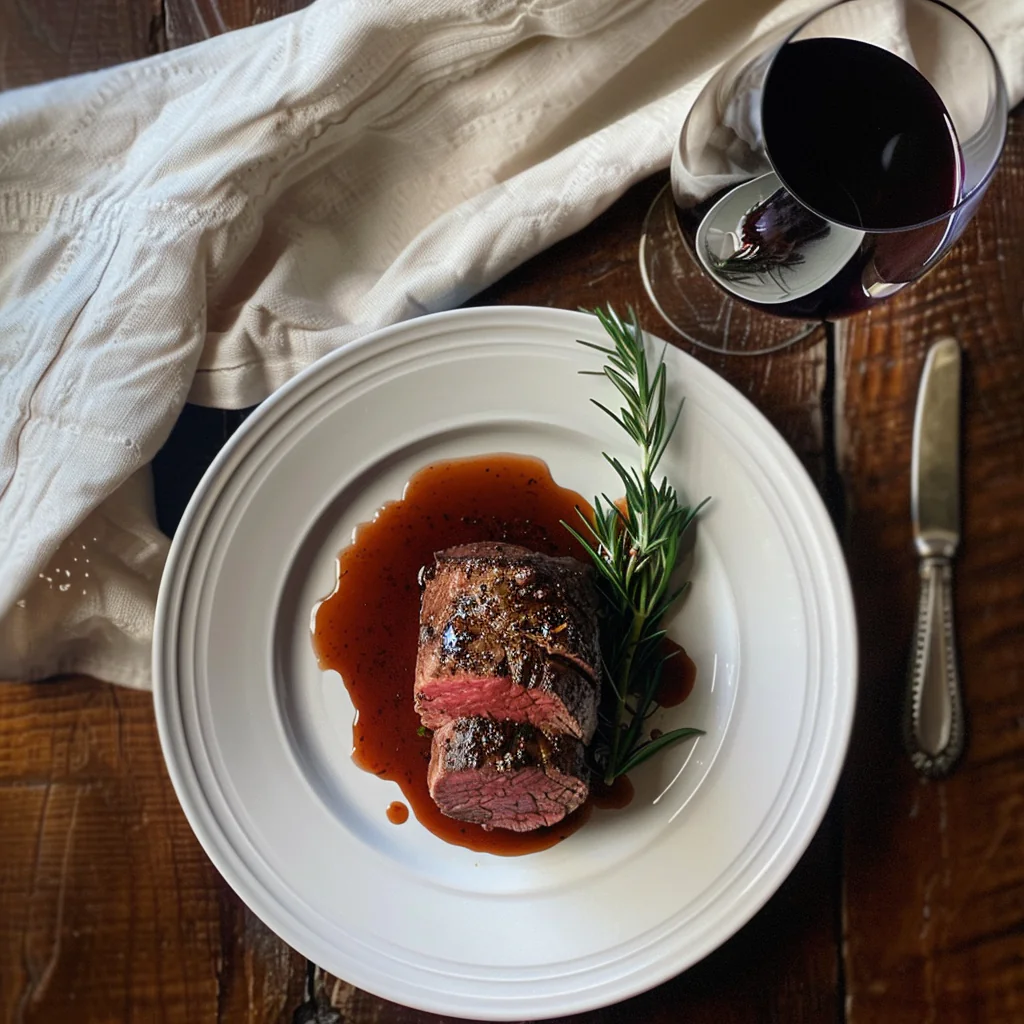
While the meat rests, use that same pan (don’t wash it!). Place it on the stove over medium heat. Add a little butter and sauté your shallots and mushrooms until soft. Pour in the red wine and scrape up the browned bits stuck to the bottom—this is the fond, and it is pure flavor gold. Let it simmer until reduced by half. Add beef broth, simmer again, then strain if you want a smooth sauce. Off the heat, whisk in cold butter cubes to thicken and gloss the sauce.
⚠️ Common Mistakes to Avoid
Even seasoned cooks slip up here. The most common error? Overcooking beef. Because tenderloin is so lean, there is no fat to render down to keep it moist if you go past medium. Pull it at 130°F (54°C); carryover cooking will bring it up to the perfect serving temp.
Another issue is improper searing. If the pan isn’t hot enough, the meat steams instead of browning, leaving you with a gray, sad exterior. Also, watch your sauce thickness. If you reduce it too much, it becomes syrupy and salty. If you don’t reduce it enough, it’s thin and watery. Aim for a consistency that coats the back of a spoon.
Finally, under-seasoning. A crust needs salt to pop. Be generous with your seasoning.
Elegant Serving Suggestions & Pairings
This roast is a showstopper, so pair it with sides that can handle its richness but don’t compete for attention. Creamy Mashed Potatoes or a Gratin Dauphinois are classic for a reason—they act as a vehicle for that red wine reduction.
For vegetables, Roasted Asparagus or Brussels Sprouts offer a bitter crunch that cuts through the fat of the meat. And don’t forget the wine pairing. A bold Cabernet Sauvignon mirrors the reduction sauce, while a lighter Pinot Noir won’t overpower the delicate herb crust. Finish the plate with a sprinkle of fresh parsley for color.
Variations & Customizations
Want to switch it up? You have options.
- Mustard Crust: Swap the herb paste for a mix of Dijon mustard and herbs. The mustard adds a tangy bite that cuts through the richness.
- Peppercorn Crust: Coat the beef in crushed black peppercorns for a “Steak au Poivre” vibe.
- Mushroom Reduction: If you aren’t a fan of wine, double the mushrooms and use a rich beef stock for an earthier, umami-rich sauce.
- Gluten-Free: This recipe is naturally gluten-free if you skip flour thickeners in the sauce (which you don’t need if you emulsify with butter).
Storage, Reheating, & Leftover Inspiration
If you actually have leftovers, store the sliced tenderloin in an airtight container in the fridge for up to 3 days. Keep the sauce separate.
Reheating is tricky because you want to avoid cooking it further. The best method is low and slow: place slices in a baking dish with a little broth or leftover sauce, cover with foil, and heat in a 250°F (120°C) oven just until warm. Or, my favorite method: eat it cold. Thinly sliced cold tenderloin makes an incredible sandwich on a crusty baguette with horseradish cream.
💡 Pro Tips from the Test Kitchen
I’ve cooked dozens of tenderloins, and these are the details that matter:
- Reverse Searing: If you have time, try roasting the beef at 250°F (120°C) until it hits 115°F (46°C) internally, then searing it in a smoking hot pan. This gives you a perfect edge-to-edge pink center with zero gray band.
- Tie It Tight: I used to skip trussing. The result? A tapered tail that was well-done by the time the center was rare. Trussing isn’t just for looks; it’s for even cooking.
- Garlic Burn: At 425°F (220°C), minced garlic in the crust can burn. To prevent bitterness, cut your garlic cloves into thin slivers and tuck them under the herb layer or use larger minced pieces rather than a paste if you prefer a milder flavor.
- Butter Temperature: For the sauce, use cold butter. Warm butter just melts into oil; cold butter creates that stable emulsion for a velvety finish.
Frequently Asked Questions (FAQ)
+Should I sear beef tenderloin before roasting?
Yes. Searing creates the Maillard reaction, developing a complex, caramelized crust that roasting alone cannot achieve. It adds significant depth to the flavor profile.
+What temperature should beef tenderloin be cooked to?
For medium-rare, remove the roast from the oven when the internal temperature reaches 130°F (54°C). The temperature will rise another 5-10 degrees during resting.
+Can I make the red wine reduction ahead of time?
Absolutely. You can make the reduction up to 2 days in advance. Store it in the fridge and reheat it gently in a saucepan, whisking in a fresh pat of butter right before serving to revive the texture.
+Why is my beef tenderloin tough?
Toughness usually comes from overcooking beef. Because tenderloin is very lean, the muscle fibers tighten rapidly past medium-rare. Always use a meat thermometer and let the meat rest to ensure tenderness.
📌 Pin this Recipe for Later!