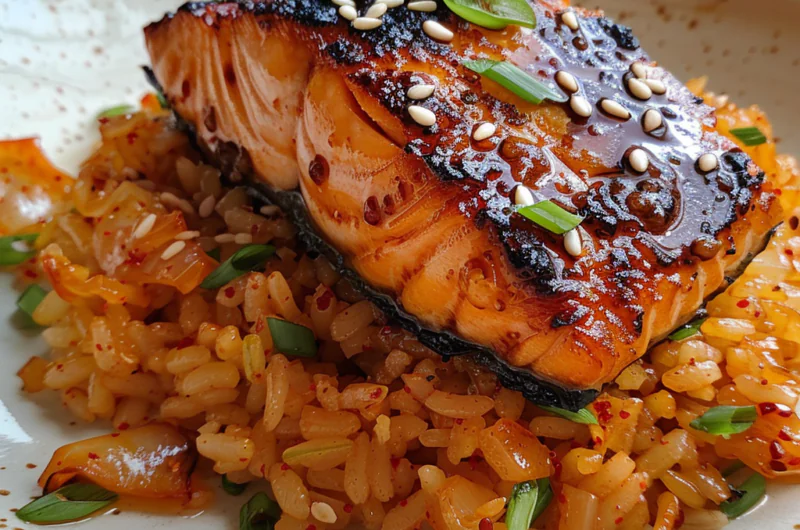
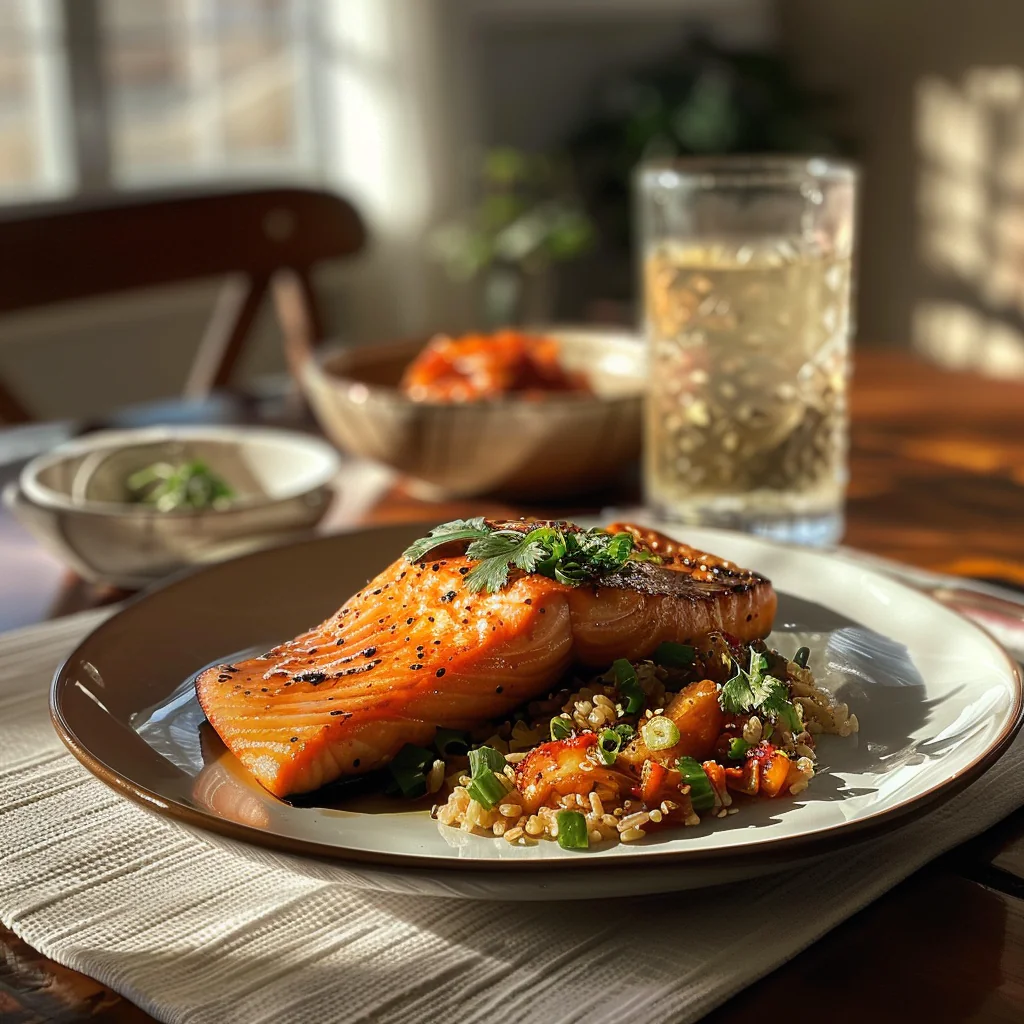
Succulent salmon glazed in spicy-sweet gochujang, served over kimchi-fried rice with golden, crispy edges — a weeknight dinner that feels like a restaurant meal but lands on your table in 30 minutes flat.
📋 In This Article
Introduction
Let’s talk about Spicy Gochujang Glazed Salmon with Crispy Kimchi Rice — a dish that hits every note you want on a Tuesday night. You know the feeling: you’re tired, it’s late, and the temptation to order takeout is strong. But here’s the thing. This seafood dinner comes together faster than delivery arrives, and it delivers the kind of flavor that makes you wonder why you ever considered anything else.
The concept is straightforward. Rich, fatty salmon fillets get coated in a gochujang-based glaze that caramelizes under heat, developing deep, complex flavor through the Maillard reaction. Meanwhile, kimchi meets cooked rice in a hot skillet, transforming into something greater than the sum of its parts — golden-brown, crispy-edged, tangy, and addictive. The whole process takes about 30 minutes from start to finish, assuming you have day-old rice in your fridge. (If you don’t, we’ll talk about that.)
Why This Recipe Works
Speed is the obvious selling point here. Salmon cooks quickly — we’re talking 8 minutes total for perfectly medium fillets. But the real magic lies in the technique. By marinating the fish in gochujang (a Korean fermented chili paste), soy sauce, and a touch of honey, you’re building layers of umami, heat, and sweetness that penetrate the surface of the fish. The gochujang glaze doesn’t just sit on top; it creates a sticky, caramelized exterior that contrasts beautifully with the tender interior.
The Crispy Kimchi Rice works on a different principle. Day-old rice is drier than freshly cooked rice because refrigeration draws out moisture. When that drier rice hits a hot skillet with oil, it crisps rather than steams. Add kimchi — which brings acidity, funk, and heat — and you get a base that’s simultaneously crunchy, soft, tangy, and savory. The two components come together in a way that feels intentional, not thrown together.
Ingredients You’ll Need
For the Gochujang Glazed Salmon
- Salmon fillets (4 pieces, about 6 ounces each): Look for fillets with vibrant color and no fishy smell. Skin-on works well here for extra crispiness.
- Gochujang (3 tablespoons): Korean fermented chili paste. It’s spicy, sweet, and deeply savory all at once.
- Soy sauce (1 tablespoon): Adds salt and umami. Use tamari for a gluten-free option.
- Honey (1 tablespoon): Balances the heat and helps the glaze caramelize.
- Sesame oil (1 tablespoon): Toasted sesame oil adds a nutty finish.
- Garlic (2 cloves, minced): Because garlic makes everything better.
- Ginger (1 teaspoon, grated): Adds brightness and cuts through the richness.
For the Crispy Kimchi Rice
- Cooked rice (3 cups, preferably day-old): Jasmine or short-grain rice works best. Freshly cooked rice can work, but it won’t crisp as well.
- Kimchi (1 cup, chopped): Well-fermented kimchi has more depth of flavor. Save the juice for extra punch.
- Vegetable oil (2 tablespoons): Neutral oil for crisping the rice.
- Scallions (2-3, sliced): For garnish and fresh bite.
- Sesame seeds (1 tablespoon): Optional, but adds texture and visual appeal.
- Salt and pepper: To taste.
Step-by-Step Instructions
1. Make the Glaze and Marinate the Salmon
In a small bowl, whisk together the gochujang, soy sauce, honey, sesame oil, garlic, and ginger. Reserve about 2 tablespoons of this mixture for brushing later — you don’t want to contaminate it with raw fish.
Coat the salmon fillets in the remaining marinade. Let them sit for 15 to 20 minutes while you prep everything else. Here’s the science: the salt in soy sauce begins to denature proteins on the surface of the fish, which helps the glaze adhere better during cooking. But don’t go longer than 30 minutes, or the acid and salt will start to break down the flesh too much, leading to a mushy texture.
2. Start the Rice
If you’re using freshly cooked rice, spread it on a baking sheet and refrigerate it for at least 15 minutes to dry out the surface. Drier rice crisps better because there’s less moisture to evaporate before browning can occur.
Heat vegetable oil in a large non-stick skillet over medium-high heat. Add the kimchi and sauté for about 2 minutes until fragrant. Add the rice and use a spatula to press it into an even layer. Let it cook undisturbed for 3 to 4 minutes. This is crucial. If you stir constantly, you’ll never get that golden, crispy crust. The Maillard reaction needs time and contact with a hot surface.
3. Sear the Salmon
While the rice crisps, heat another skillet over medium-high heat with a thin layer of oil. Remove the salmon from the marinade, letting excess drip off. Place the fillets in the pan, skin-side up if you’re using skin-on salmon.
Sear for about 4 minutes on the first side until you see the edges turning opaque and the bottom is deeply golden. Flip and cook for another 3 to 4 minutes. The internal temperature should reach 125°F for medium-rare or 145°F if you prefer it fully cooked. Carryover cooking will bring the temperature up another 5 degrees after you remove it from the heat, so pull it slightly before your target.
4. Glaze and Finish
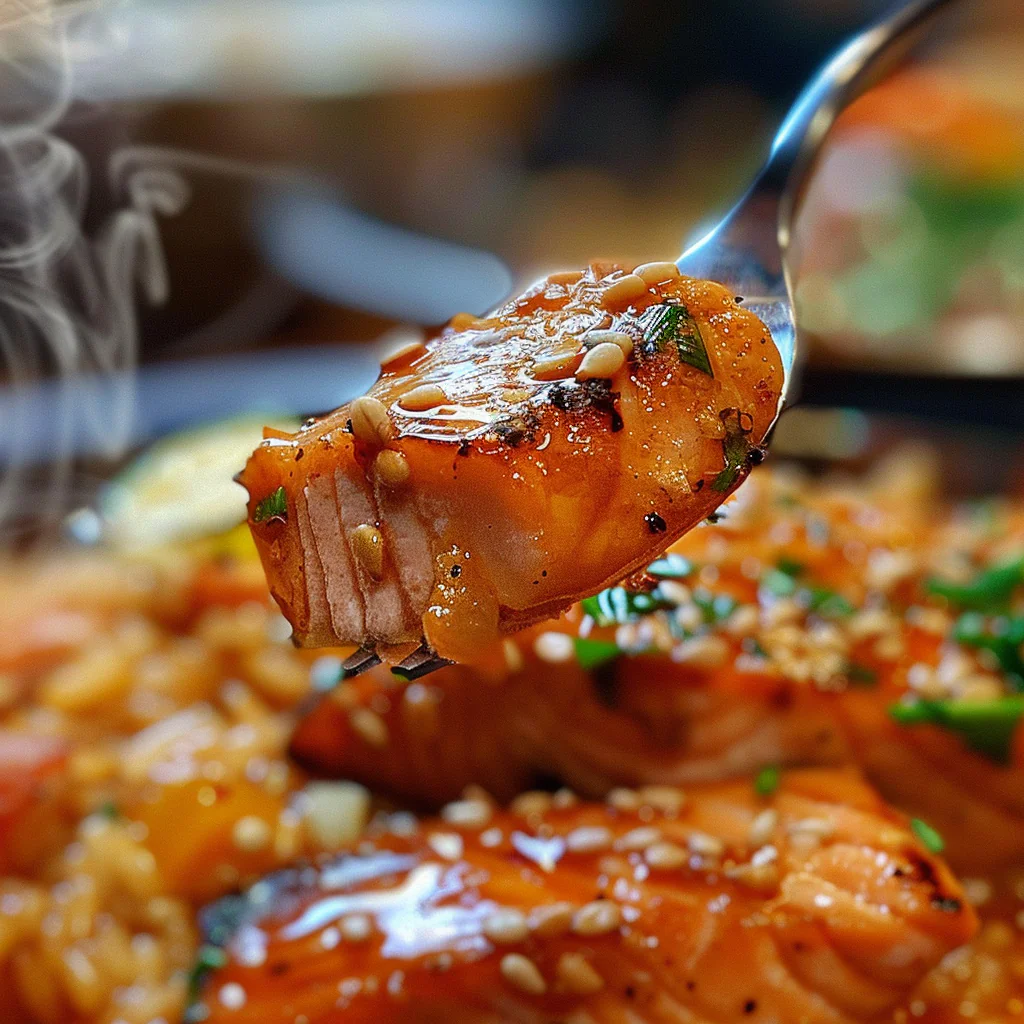
Brush the reserved glaze onto the salmon during the last minute of cooking. The sugars in the honey will caramelize quickly, so watch carefully to prevent burning. The glaze should look sticky and glossy, not blackened.
Flip the rice — or just give it a good stir if you’re not going for maximum crispiness. Taste and adjust seasoning with salt and pepper. If the rice feels dry, add a splash of kimchi juice or water.
5. Assemble and Serve
Spoon the crispy kimchi rice onto plates. Top with the glazed salmon. Garnish with scallions and sesame seeds. Eat immediately while the rice is still crispy and the salmon is warm.
⚠️ Common Mistakes to Avoid
Even simple recipes have pitfalls. Here’s what trips people up:
Over-marinating the salmon. More time doesn’t equal more flavor here. The salt and acid in the marinade will start to cure the fish if left too long, resulting in a texture that’s firm on the outside and mushy on the inside. Stick to 15 to 30 minutes.
Stirring the rice too much. Patience is the secret to crispy rice. Every time you stir, you break the contact between the rice and the hot pan, interrupting the browning process. Press it down, walk away, and let the heat do its job.
Using a pan that’s too hot or too cold. If the pan is smoking, the glaze will burn before the salmon cooks through. If it’s too cool, you’ll get gray, steamed fish instead of golden, seared fillets. Medium-high is the sweet spot.
Skipping the reserved glaze. I used to skip this step — don’t. Using the same marinade that touched raw fish for a finishing glaze is a food safety violation. Always reserve a clean portion.
Variations and Substitutions
This recipe is flexible. Here’s how to adapt it:
- Protein swaps: Cod, halibut, or shrimp all work beautifully. Adjust cooking times accordingly — shrimp cook in 2 to 3 minutes, while thicker white fish may need a minute longer than salmon. Chicken thighs are another option, but increase the cook time to about 6 minutes per side.
- Gluten-free: Use tamari instead of soy sauce, and check that your gochujang doesn’t contain wheat-based thickeners.
- Lower carb: Swap the rice for cauliflower rice. It won’t get as crispy, but sauté it in a hot pan for a few minutes and it’ll still absorb the kimchi flavor.
- Heat level: If gochujang is too spicy, reduce the amount to 2 tablespoons and increase the honey to balance. You can also mix the gochujang with ketchup or miso paste for a milder flavor profile.
- Vegetable add-ins: Throw in frozen peas, diced carrots, or corn with the rice for extra substance.
Storage and Reheating Tips
Leftovers keep well, though the rice won’t stay crispy indefinitely.
Storage: Refrigerate salmon and rice separately in airtight containers. The salmon will keep for up to 3 days; the rice for up to 4 days. You can freeze the salmon for up to 2 months, but the rice doesn’t freeze well — it gets mushy on reheating.
Reheating the salmon: The oven is your best bet. Preheat to 350°F and bake for 10 to 12 minutes until warmed through. Microwaving works in a pinch, but it tends to make the fish smell stronger and the texture rubbery. Cover with a damp paper towel if you go this route.
Reheating the rice: Return it to a skillet with a splash of water or kimchi juice over medium heat. Cover with a lid for 2 minutes to steam, then uncover and cook until the moisture evaporates and the rice crisps again.
💡 Pro Tips for the Best Results
After making this dish more times than I can count, here’s what I’ve learned:
Get the right gochujang. Not all brands are created equal. Look for one that lists fermented soybeans and rice as ingredients — those indicate a more traditional product with deeper flavor. Some cheaper versions are mostly corn syrup and chili powder.
Use a non-stick pan for the rice. A well-seasoned cast iron skillet works too, but non-stick makes the flipping process easier, especially if you’re new to making crispy rice.
Don’t skip the kimchi juice. The liquid in the kimchi jar is packed with flavor. A splash added to the rice at the end wakes everything up.
Let the salmon come to room temperature before cooking. Taking the chill off the fish helps it cook more evenly. Pull it from the fridge about 15 minutes before you’re ready to cook.
Rest the fish. I know it’s tempting to dig in immediately. But letting the salmon rest for 2 to 3 minutes after cooking allows the muscle fibers to relax and reabsorb the juices that were pushed toward the center by the heat. Cut into it too early, and you’ll lose those juices on the cutting board.
Frequently Asked Questions (FAQ)
+Can I use fresh rice instead of day-old rice?
You can, but it won’t get as crispy. Freshly cooked rice has higher moisture content, which means it steams before it browns. If you only have fresh rice, spread it on a baking sheet and refrigerate it for at least 15 minutes (longer is better) to dry out the surface. A thin layer helps — don’t pile it up.
+How do I know when the salmon is done?
The most reliable method is an instant-read thermometer. 125°F gives you medium-rare salmon with a translucent center. 145°F is the USDA recommendation for fully cooked, though the texture will be firmer and drier. If you don’t have a thermometer, the flesh should flake easily when pressed and turn opaque throughout. The carryover cooking will bring the temperature up another 5 degrees after you remove it from the heat.
+Why is my rice mushy instead of crispy?
Usually it’s one of three things: the pan wasn’t hot enough, the rice was too wet, or you stirred too much. Make sure your skillet is properly preheated before adding the rice. Use day-old rice if possible, or spread fresh rice out to dry. And resist the urge to stir constantly — let the rice make contact with the hot surface.
+What can I substitute for gochujang?
If you can’t find gochujang, you can make a rough substitute by mixing sriracha with miso paste and a little sugar. It won’t have the same depth of fermented flavor, but it’ll work in a pinch. For a milder version, use ketchup mixed with chili garlic sauce.
+How long does leftover salmon last in the fridge?
Cooked salmon keeps for 3 to 4 days in an airtight container in the refrigerator. After that, the texture starts to deteriorate and the flavor gets fishier. If you won’t eat it within that window, freeze it instead.
+What sides go well with this dish?
The kimchi rice is already a complete component, but if you want to round out the meal, consider a simple cucumber salad dressed with rice vinegar, steamed broccoli, or a bowl of miso soup. Something light and refreshing balances the richness of the salmon and the heat of the gochujang.